
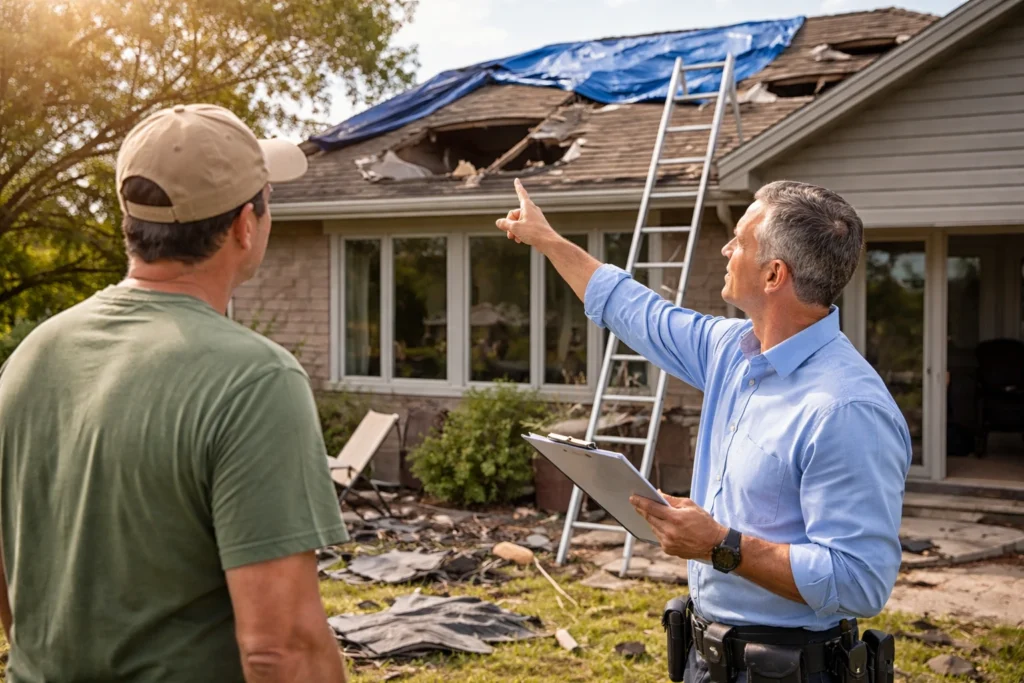
When a storm tears through your neighborhood or a pipe bursts at 2 a.m., everything changes fast. In those moments, a homeowner property damage adjuster can be the difference between a frustrating insurance battle and a properly funded recovery.
I’ve seen it too many times. A homeowner assumes the insurance company will “take care of everything.” The estimate comes in lower than expected. Repairs stall. Stress builds. Questions multiply. And suddenly the claim feels more complicated than the damage itself.
If you own property in Abilene, Texas, this matters. Hailstorms. High winds. Sudden freezes. Plumbing failures. Fire losses. West Texas weather is not gentle on homes. And when damage happens, how your claim is handled directly impacts your financial future.
Let’s break this down clearly and practically.
What Is a Homeowner Property Damage Adjuster?
A homeowner property damage adjuster is a licensed professional who evaluates residential property damage and manages insurance claims related to that damage.
But here’s the key distinction: not all adjusters work for you.
There are three main types.
Types of Adjusters Explained
| Type of Adjuster | Who They Work For | Who Pays Them | Primary Responsibility |
| Staff Adjuster | Insurance company | Insurance company | Protect insurer’s financial interest |
| Independent Adjuster | Contracted by insurance company | Insurance company | Represents insurer on assigned claims |
| Public Adjuster | Homeowner | Contingency-based | Represents homeowner’s financial interest |
This distinction is critical.
Insurance company adjusters are not villains. They simply work for the carrier. Their obligation is to interpret the policy and settle the claim within company guidelines.
A homeowner property damage adjuster who is licensed as a public adjuster works for you. Their responsibility is to fully document damage, interpret policy coverage, and negotiate a fair settlement on your behalf.
That difference can affect tens of thousands of dollars.
Common Property Damage in Abilene, Texas
Abilene homeowners face specific regional risks. Ignoring them is expensive.
Here’s what shows up most often:
- Hail damage to roofing systems
- Wind damage to shingles and siding
- Water damage from plumbing failures
- Fire and smoke damage
- Foundation issues due to soil movement
- Frozen pipe damage during sudden cold snaps
Hail alone causes billions in damage across Texas each year. Roof damage is often not fully visible from the ground. A quick visual glance doesn’t tell the whole story.
That’s where a homeowner property damage adjuster provides value — by identifying what others might overlook.
When Should You Call a Homeowner Property Damage Adjuster?
Not every claim requires representation. But certain situations absolutely do.
5 Signs You Need Professional Representation
- The damage is extensive or structural.
- Your claim was denied.
- The settlement offer feels low.
- The insurance estimate misses obvious repairs.
- You’re overwhelmed by the process.
Large-loss claims especially benefit from professional oversight. Fire losses. Major water damage. Partial roof replacements. These aren’t minor repairs.
The more complex the damage, the more documentation matters.
And documentation drives settlement value.
What Does a Homeowner Property Damage Adjuster Actually Do?
Let’s walk through the real work behind the scenes.
1. Policy Review
Insurance policies are contracts. Dense ones.
A homeowner property damage adjuster reviews:
- Coverage limits
- Deductibles
- Replacement cost provisions
- Actual cash value clauses
- Exclusions and endorsements
This step alone can uncover benefits homeowners didn’t realize they had.
2. On-Site Inspection
Thorough inspections include:
- Roof slope evaluation
- Moisture readings inside walls
- Attic inspection
- Structural integrity review
- Exterior and interior damage documentation
This isn’t a five-minute walkthrough.
It’s detailed. Methodical. Evidence-based.
3. Damage Documentation
Insurance companies pay based on documentation.
That means:
- Photographs
- Measurements
- Line-item repair estimates
- Material pricing validation
- Code upgrade requirements
Miss a line item, and you may never recover that cost.
4. Estimating and Scope Development
Insurance estimates are often written using standardized software. But those estimates depend on accurate scope.
If flashing replacement is missed, it won’t be paid.
If underlayment is excluded, it won’t appear.
And if code-required upgrades aren’t included, you fund them yourself.
A homeowner property damage adjuster ensures scope completeness.
5. Negotiation
This is where expertise matters most.
Negotiation involves:
- Reviewing carrier estimates
- Submitting supplements
- Challenging depreciation calculations
- Providing contractor bids
- Responding to coverage disputes
The process can take weeks or months. Having representation reduces pressure and increases leverage.
Why Insurance Estimates Often Come in Lower
This is uncomfortable but real.
There are common reasons initial offers fall short:
- Depreciation calculations
- Missed damage areas
- Pricing discrepancies
- Omitted code upgrades
- Disputed causation
Insurance adjusters handle large volumes of claims, especially after storms. Volume affects attention to detail.
A homeowner property damage adjuster focuses on your claim specifically. That focus matters.
Step-by-Step: The Claims Process Simplified
Here’s how it typically unfolds:
- Damage occurs.
- Homeowner files claim.
- Insurance adjuster inspects property.
- Initial estimate issued.
- Settlement offer presented.
- Disputes or supplements submitted (if needed).
- Final settlement agreed upon.
Without professional oversight, steps 5 and 6 are where homeowners often lose ground.
Case Example: Hail Damage in Abilene
Imagine this scenario.
A spring hailstorm hits Abilene. A homeowner files a claim for roof damage. The insurance company estimates partial repair — $9,800.
The homeowner’s contractor believes the roof requires full replacement due to brittle shingles and widespread impact damage.
A homeowner property damage adjuster conducts a full inspection. Additional slopes show significant bruising. Code compliance requires full replacement.
Revised documented claim: $22,500.
After negotiation and supplemental submission, settlement increases substantially.
That difference? It funds proper repairs. It preserves home value. And it protects long-term investment.
Cost: How Is a Homeowner Property Damage Adjuster Paid?
In Texas, public adjusters typically work on a contingency fee basis.
That means:
- No upfront payment
- Fee is a percentage of settlement
- Paid only if claim is successful
Percentages vary depending on claim complexity and size.
For many homeowners, the increased settlement more than offsets the fee. But every case is unique. Transparency is essential.
Licensing and Regulation in Texas
In Texas, public adjusters must be licensed by the Texas Department of Insurance.
This includes:
- State licensing requirements
- Bonding requirements
- Ethical standards
- Contract regulations
- Cancellation rights for homeowners
Always verify credentials. A legitimate homeowner property damage adjuster will provide license information willingly.
Mistakes Homeowners Make After Property Damage
Stress leads to rushed decisions. Avoid these common errors:
- Accepting the first offer without review
- Starting permanent repairs before documentation
- Failing to photograph damage immediately
- Not reading the policy
- Missing deadlines for supplemental claims
Patience and documentation win claims.
Emotion does not.
How a Homeowner Property Damage Adjuster Reduces Stress
Let’s be honest. Insurance claims are draining.
Phone calls.
Emails.
Inspection scheduling.
Paperwork.
Contractor coordination.
Now add daily life on top of that.
A homeowner property damage adjuster takes on the administrative burden. They:
- Communicate with the carrier
- Track deadlines
- Submit documentation
- Negotiate settlements
- Clarify coverage questions
That relief alone can be invaluable.
Strategic Questions to Ask Before Hiring
If you’re considering representation, ask:
- Are you licensed in Texas?
- How many similar claims have you handled in Abilene?
- What is your fee structure?
- How do you document losses?
- How often will I receive updates?
Clarity builds trust.
Is It Always Necessary?
No.
Small, straightforward claims may not require professional representation. Minor fence damage. Single-room cosmetic repairs. Simple losses can be handled independently.
But major structural damage? Fire loss? Complex water intrusion?
That’s different.
In high-value claims, professional guidance often prevents underpayment.
Protecting Your Largest Investment
For most families, a home is their largest financial asset.
It’s not just drywall and shingles. It’s equity. Stability. Long-term wealth.
A homeowner property damage adjuster exists to protect that asset when disaster strikes.
And in a storm-prone region like Abilene, preparation isn’t paranoia. It’s prudence.
The insurance company has professionals representing its interests. That’s standard business practice.
You’re allowed to do the same.
Final Thoughts
Storms are unpredictable. Plumbing failures happen without warning. Fires change lives in minutes.
But how you respond to property damage determines how smoothly recovery unfolds.
A knowledgeable homeowner property damage adjuster brings structure to chaos. Documentation to confusion. Strategy to negotiation.
If you ever find yourself staring at roof shingles scattered across your yard or water pooling across your hardwood floors, pause before accepting the first number placed in front of you.
Ask questions.
Review documentation.
Understand your policy.
And if the situation warrants it, bring in someone whose sole job is to represent you.
Because protecting your home is protecting your future.