
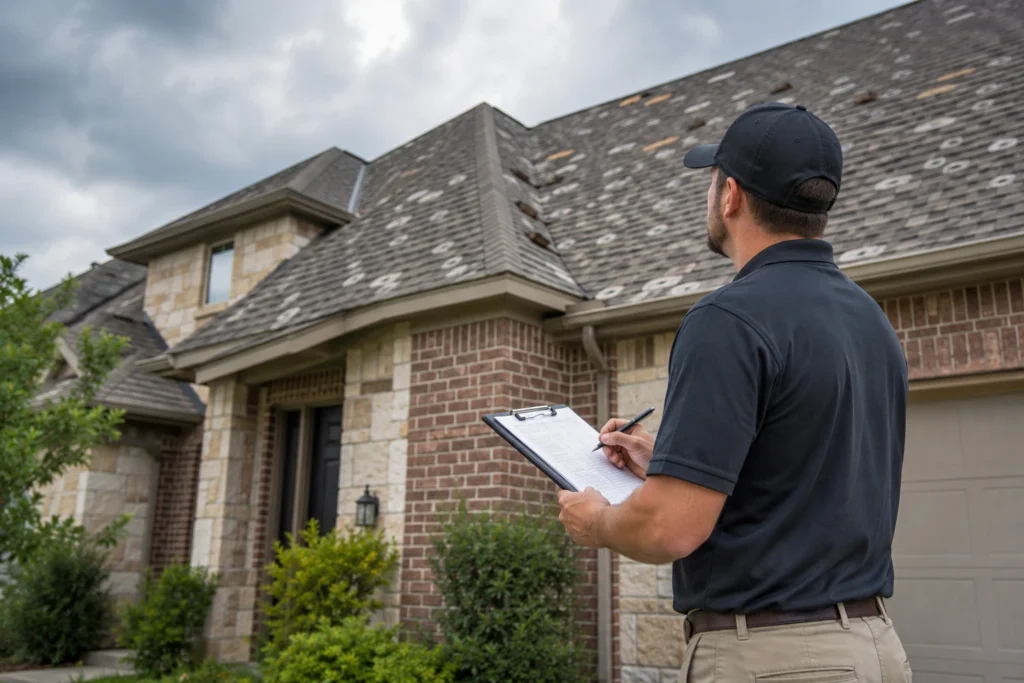
Hailstorms in West Texas are not small events. They hit hard, move fast, and leave homeowners staring at bruised shingles, leaking ceilings, broken gutters, and confusing insurance paperwork. That is exactly why understanding Public Adjuster vs. Insurance Adjuster for Hail Claims in Abilene, TX matters so much. Most homeowners assume every adjuster involved in the claim works for them. That is not always true.
Some adjusters represent the insurance company. Others represent the policyholder. The difference can affect inspections, documentation, negotiations, and ultimately the amount paid on a hail damage claim. And in Abilene, hail claims are common enough that knowing how this process works is not optional anymore. It is part of protecting one of the biggest investments most families will ever own. If you have roof damage, siding damage, interior leaks, or claim disputes after a Texas hailstorm, this guide breaks everything down clearly. No fluff. No confusing legal language. Just practical information homeowners can actually use.
Why Hail Claims Become Complicated in Abilene
Abilene sits directly in a region that experiences aggressive storm activity every year. Large hail, wind-driven rain, and severe temperature swings create ideal conditions for roofing damage. Sometimes the damage is obvious. Missing shingles. Bent gutters. Water stains on ceilings. Other times, the damage hides beneath the surface. Granule loss. Fractured shingle mats. Tiny punctures around flashing systems. Weaknesses that slowly turn into expensive leaks months later.
That is where problems begin. Insurance companies often inspect homes quickly after major storms because claim volumes explode. Hundreds or even thousands of inspections may happen within days. Speed becomes the priority. But speed and thoroughness are not always the same thing. This is one reason the discussion around Public Adjuster vs. Insurance Adjuster for Hail Claims in Abilene, TX has become more important in recent years.
Understanding What an Insurance Adjuster Does
An insurance adjuster investigates claims for the insurance carrier. That part is important. They work for the insurance company, not the homeowner. Now, that does not automatically mean they are dishonest or unfair. Many adjusters work hard and try to handle claims properly. But homeowners should still understand who the adjuster represents during the process.
There are usually two types involved in hail claims:
| Type of Adjuster | Who They Work For | Primary Responsibility |
| Staff Adjuster | Insurance company | Handles claims directly for carrier |
| Independent Adjuster | Contracted by insurance company | Assists carriers during large claim events |
After a hailstorm, the insurance adjuster typically:
- Inspects the property
- Evaluates visible damage
- Writes an estimate
- Reviews policy coverage
- Determines claim payment recommendations
That sounds straightforward. But real-world hail claims are rarely simple. Especially when roofing systems involve steep slopes, multiple layers, detached structures, code upgrades, or hidden damage.
The Challenge With High-Volume Hail Claims
After major Texas storms, insurance carriers face enormous claim volume. That creates pressure. Inspectors may need to evaluate several homes every day across wide geographic areas. Some inspections become rushed. Others rely heavily on software-generated estimating systems. This is where homeowners sometimes run into problems.
Common issues include:
- Missed roofing accessories
- Underestimated material quantities
- Overlooked ventilation systems
- Incomplete flashing replacement
- Incorrect repair-versus-replace conclusions
- Interior moisture damage being excluded initially
Even small omissions matter. A missing line item here and there can easily reduce claim payouts by thousands of dollars. And homeowners usually do not realize what is missing because they are not trained to analyze insurance scopes.
What Is a Public Adjuster?
A public adjuster works for the policyholder, not the insurance company. That changes the entire dynamic. Instead of protecting the carrier’s financial interests, the public adjuster focuses on documenting damage, interpreting policy language, and negotiating for the homeowner. In Texas, public adjusters must be licensed through the Texas Department of Insurance.
Their role often includes:
- Detailed property inspections
- Reviewing insurance policies
- Photographing damage
- Preparing supplemental estimates
- Meeting with carrier representatives
- Negotiating disputed scope items
- Supporting claim documentation
When people search for information about Public Adjuster vs. Insurance Adjuster for Hail Claims in Abilene, TX, this distinction is usually the biggest thing they want clarified. Who actually represents me? That answer matters. A lot.
Public Adjuster vs. Insurance Adjuster for Hail Claims in Abilene, TX
Let us break this comparison down clearly.
| Category | Insurance Adjuster | Public Adjuster |
| Represents | Insurance company | Homeowner |
| Paid By | Insurance carrier | Policyholder settlement percentage |
| Goal | Evaluate claim for carrier | Maximize covered claim value |
| Inspection Depth | Often limited by volume/time | Usually more detailed |
| Negotiation Role | Protect carrier position | Advocate for homeowner |
| Policy Interpretation | Carrier-focused | Policyholder-focused |
| Supplemental Claims | Sometimes limited | Frequently pursued |
| Communication Priority | Insurance company | Homeowner |
This table alone explains why so many claim disputes develop after hailstorms. The two sides are approaching the same property from completely different perspectives.
Why Roofing Claims Become Disputed So Often
Roofing systems are more complex than most homeowners realize. A hailstorm does not simply damage shingles.
It may also affect:
- Ridge caps
- Starter strips
- Flashing systems
- Pipe boots
- Ventilation systems
- Drip edge
- Gutters
- Downspouts
- Skylights
- Window screens
- Interior drywall
And then there is hidden damage. That is where many disputes start. A roof may look repairable from the ground while actually containing widespread impact bruising that shortens its lifespan dramatically. In some cases, shingles become discontinued. Matching replacement materials becomes impossible. That introduces another layer of negotiation. Especially in Texas.
How Insurance Companies Evaluate Hail Damage
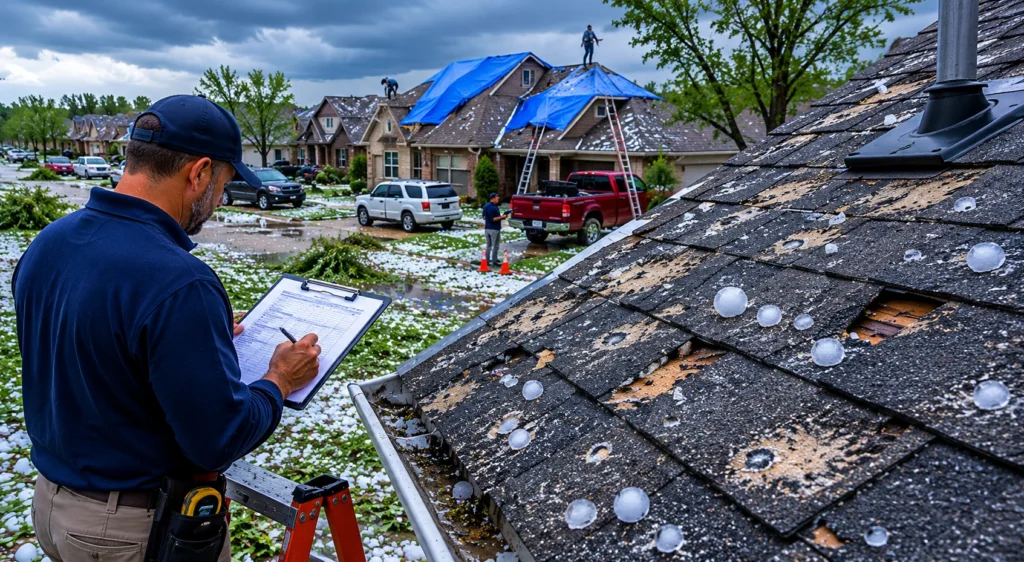
Insurance companies typically rely on structured estimating platforms like Xactimate to create repair scopes. The software itself is not the problem. The issue comes down to what gets included or excluded inside the estimate.
For example, an inspection may approve:
- 20 damaged shingles
- Basic repairs
- Partial gutter replacement
But fail to include:
- Steep roof charges
- Safety setup
- Detach and reset components
- Matching requirements
- Code-required upgrades
- Additional slopes with impact damage
Those omissions add up fast. And homeowners rarely notice them initially because the estimate appears detailed on paper. This is one reason discussions around Public Adjuster vs. Insurance Adjuster for Hail Claims in Abilene, TX continue growing among homeowners dealing with storm losses.
Commonly Missed Hail Damage Line Items
Some line items repeatedly become dispute points during Texas hail claims.
Here are several examples:
| Category | Frequently Missed Items |
| Roofing | Starter shingles, ridge caps |
| Safety | Harness setup, steep charges |
| Flashing | Valley metal, drip edge |
| Ventilation | Ridge vents, turbine vents |
| Gutters | Downspout detachment |
| Interior | Texture matching, insulation |
| Cleanup | Dumpster and disposal costs |
Individually, these may seem minor. Collectively, they can dramatically affect claim value.
Why Documentation Changes Everything
Strong documentation drives strong claims. Weak documentation creates weak negotiations. It is that simple. Public adjusters often spend far more time documenting damage because their entire negotiation position depends on evidence.
That evidence may include:
- Wide-angle roof photography
- Close-up impact photos
- Moisture mapping
- Weather reports
- Contractor inspections
- Material availability research
- Interior leak tracing
The stronger the documentation package becomes, the harder it is for important damage to be ignored. That does not guarantee every dispute disappears. But it absolutely changes the leverage inside negotiations. Detailed inspections often become critical during Hail Damage Claim Supplements, especially when hidden roofing damage appears after the initial carrier inspection. Some advanced forensic evaluations of material stress and impact behavior occasionally involve analytical concepts related to rheology, particularly when experts analyze how roofing materials respond to repeated environmental stress, hail impact, and long-term structural fatigue.
When Homeowners Should Consider a Public Adjuster
Not every claim requires a public adjuster. Small cosmetic claims may move smoothly without major disputes. But certain situations raise red flags quickly.
Homeowners often consider professional representation when:
- The roof replacement was denied
- The settlement feels too low
- Multiple structures are damaged
- Interior leaks developed
- The insurance estimate seems incomplete
- The claim was partially denied
- Matching disputes exist
- The carrier says damage is “wear and tear”
Large hail losses create financial risk. And many homeowners simply are not comfortable negotiating complex property claims alone. That is understandable. Especially when thousands of dollars are involved.
Situations Where Public Adjusters Often Add Value
Some claims naturally become more complicated than others. Public adjusters frequently become involved in:
Large Residential Roof Claims
Complex roofing systems create larger estimating disputes.
Commercial Properties
Flat roofing systems often involve hidden moisture intrusion and membrane damage.
Reopened Claims
Some damage appears months later after leaks develop.
Denied Hail Claims
Additional inspections sometimes reveal damage overlooked initially.
Matching Disputes
Discontinued shingles frequently create settlement disagreements. When evaluating Public Adjuster vs. Insurance Adjuster for Hail Claims in Abilene, TX, homeowners should focus less on emotion and more on claim complexity. The more complicated the loss becomes, the more important detailed documentation usually becomes too.
Mistakes Homeowners Make After Hailstorms
Some claim problems are avoidable. Others are not. But certain mistakes repeatedly hurt otherwise strong hail claims.
Waiting Too Long
Evidence changes quickly under Texas weather conditions. Granules wash away. Water spreads. Temporary repairs alter the original damage. Fast documentation matters.
Accepting the First Offer Immediately
Initial estimates are not always final. Especially after rushed catastrophe inspections. Homeowners should carefully review scope details before agreeing to settlements.
Relying Only on Verbal Conversations
Always request written communication. Always. Emails create accountability and preserve documentation.
Throwing Away Damaged Materials
Preserved evidence can become critical during disputes. Especially when questions about causation arise later.
Hiring Contractors Too Quickly
Some homeowners sign repair contracts before understanding what insurance actually approved. That creates confusion and financial surprises later.
The Financial Side of Hiring a Public Adjuster
This is usually the first question homeowners ask. How do public adjusters get paid? In Texas, public adjusters commonly work on contingency fees. That means they receive a percentage of the claim recovery. No large upfront payment is typically required.
Fee percentages vary depending on:
- Claim complexity
- Size of the loss
- Whether litigation exists
- Supplemental negotiations
- Timing of involvement
Homeowners should read contracts carefully and ask detailed questions before signing anything. Professional representation should feel transparent, not confusing.
Can a Public Adjuster Increase the Settlement?
Sometimes yes. Sometimes no. Every claim is different. But detailed documentation often uncovers legitimate covered damage that was overlooked initially.
That can include:
- Additional roofing components
- Code-required upgrades
- Interior repairs
- Moisture-related issues
- Matching problems
- Labor adjustments
The goal is not inflating claims. The goal is accurate claims. That distinction matters.
Texas Licensing and Consumer Protections
Texas regulates public adjusters through the Texas Department of Insurance. That oversight exists for a reason. After large storms, unqualified storm-chasing companies often flood affected areas promising unrealistic outcomes.
Homeowners should verify:
- Active licensing
- Physical business presence
- Local experience
- Written contracts
- Reputation history
This becomes especially important during major hail seasons in Abilene. Professional licensing protects homeowners from avoidable scams and unethical behavior. The Texas Department of Insurance provides consumer guidance regarding claim handling and adjuster licensing. Texas Department of Insurance
Real-World Example: Insurance Adjuster Only
Imagine a homeowner in Abilene receives a carrier inspection after a severe hailstorm.
The insurance adjuster approves:
- Minor roof repairs
- Partial gutter replacement
- Small interior patching
Estimated payout: $11,000. The homeowner assumes everything was covered properly. Months later, leaks continue developing.
A contractor discovers:
- Additional slope damage
- Compromised flashing
- Ventilation issues
- Underlayment deterioration
The original estimate missed critical components. Now the homeowner must reopen negotiations. That happens more often than people realize.
Real-World Example: Public Adjuster Involvement
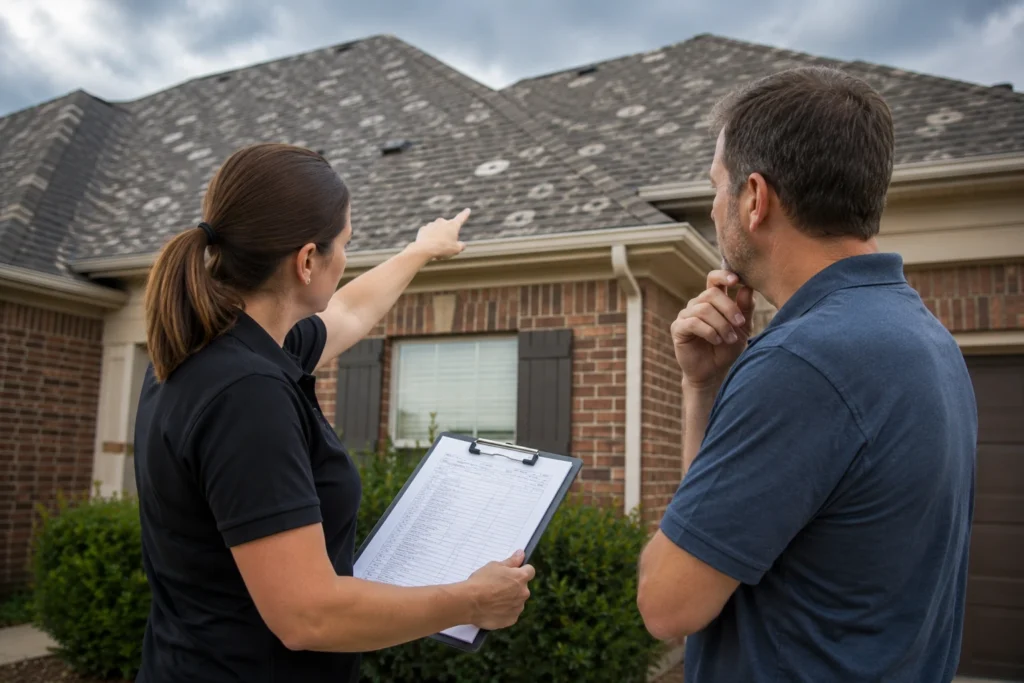
Now imagine the same property with a detailed public adjuster inspection early in the process.
The inspection identifies:
- Full roofing impact damage
- Multiple compromised accessories
- Interior moisture migration
- Matching issues
- Code upgrade requirements
Comprehensive documentation gets submitted immediately. Negotiations become more evidence-driven. The final settlement increases because additional covered damage was documented properly from the beginning. Again, outcomes vary. But documentation changes leverage.
Questions Homeowners Should Ask Before Choosing Representation
Whether dealing with a carrier adjuster or public adjuster, homeowners should ask smart questions.
Questions for Insurance Adjusters
- What exactly was included in the estimate?
- Were all roof slopes inspected?
- How was repairability determined?
- Were code upgrades considered?
- Are matching issues addressed?
Questions for Public Adjusters
- Are you licensed in Texas?
- How much hail claim experience do you have?
- How are fees calculated?
- Will you handle supplements personally?
- How often will updates be provided?
Clear communication matters. A lot.
Red Flags Homeowners Should Never Ignore
After storms, pressure tactics increase dramatically.
Be cautious if someone:
- Demands immediate signatures
- Promises guaranteed payouts
- Avoids written agreements
- Refuses to explain fees
- Cannot verify licensing
- Uses fear-based sales tactics
Professional claim handling should feel organized and transparent. Not rushed. Not chaotic.
Why Understanding Representation Matters
At the center of the Public Adjuster vs. Insurance Adjuster for Hail Claims in Abilene, TX discussion is one simple reality:
Representation affects outcomes. Insurance adjusters represent carriers. Public adjusters represent policyholders. That difference shapes inspections, documentation, negotiations, and settlement strategies throughout the entire claim process. Neither side automatically guarantees perfection. But homeowners deserve to understand who is advocating for their interests during one of the most financially stressful situations property owners face.
Final Thoughts
Hail claims are rarely just about shingles. They involve documentation, policy interpretation, estimating accuracy, negotiation strategy, and long-term property protection. That is why understanding Public Adjuster vs. Insurance Adjuster for Hail Claims in Abilene, TX is so important for homeowners dealing with storm damage across West Texas. Some claims move smoothly.
Others become complicated quickly. The key is staying informed before making major decisions. Document everything. Ask questions. Review estimates carefully. Understand your policy. Verify licensing. Keep communication in writing. And most importantly, remember this: The strongest hail claims are rarely built on emotion. They are built on evidence, organization, and strategy.
FAQs
A public adjuster works for the homeowner, while an insurance adjuster represents the insurance company during the claim process.
Yes. Public adjusters often review denied claims, document overlooked damage, and negotiate for reconsideration or supplemental payments.
No. Insurance adjusters are hired by insurance carriers to evaluate claims on the company’s behalf.
Many homeowners consider hiring a public adjuster when claims are underpaid, denied, delayed, or involve major roof damage.
Most public adjusters work on a contingency fee basis, meaning they receive a percentage of the final claim settlement.
Yes. Hail can create bruising, granule loss, and weakened roofing materials that are difficult to spot without a detailed inspection.
Missed items often include flashing, ridge caps, starter shingles, ventilation components, and steep roof labor charges.
Yes, but complex hail claims often require detailed documentation, policy interpretation, and estimating knowledge to negotiate effectively.
Simple claims may resolve in weeks, while disputed or supplemental hail claims can take several months depending on complexity.
Additional damage is often discovered after repairs begin, especially with roofing systems, flashing, underlayment, and interior moisture intrusion.