
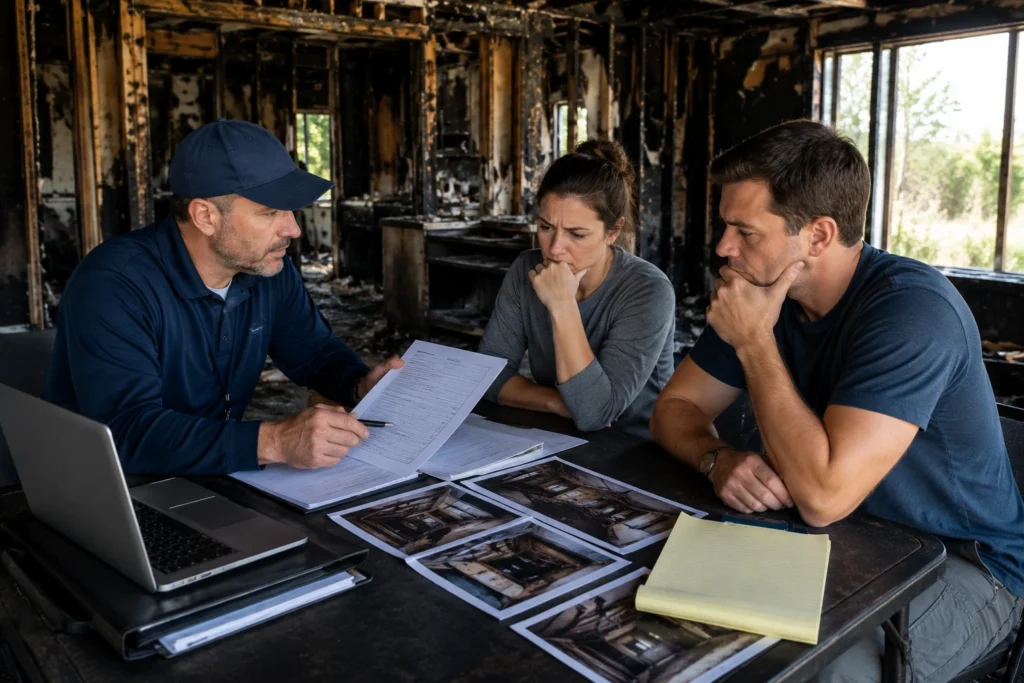
A serious property fire changes everything fast. One moment life feels normal. The next, you are standing outside looking at smoke, water, debris, and uncertainty. In the middle of that chaos, a fire insurance adjuster becomes one of the most important people involved in the recovery process. And honestly? Many property owners are not fully prepared for how complicated fire claims can become.
Fire damage is rarely limited to burned materials alone. Smoke travels through walls. Water soaks flooring and insulation. Electrical systems become dangerous. Hidden structural problems emerge days or weeks later. What initially looks like a straightforward claim can quickly turn into a stressful financial dispute. That is why understanding how the process works matters so much. For homeowners and commercial property owners in Abilene, knowing how fire insurance claims are evaluated can make a major difference in how smoothly recovery moves forward. The more informed you are, the stronger your position becomes during the claim process.
What Is a Fire Insurance Adjuster?
A fire insurance adjuster is a professional responsible for evaluating fire-related property losses during an insurance claim. Their job involves inspecting damage, reviewing insurance coverage, estimating repair costs, and determining how much compensation may be owed under the policy. That sounds simple on paper. In reality, fire claims are often extremely detailed.
A single fire can affect:
- Roofing systems
- Structural framing
- Electrical wiring
- Plumbing
- HVAC systems
- Cabinets and finishes
- Personal belongings
- Business equipment
- Inventory
- Indoor air quality
And every category requires documentation. The adjuster’s evaluation plays a major role in how the claim develops. That is why careful inspections, organized evidence, and accurate estimates matter so much from the beginning.
Types of Fire Insurance Adjusters
Not every adjuster works for the same side. This confuses many policyholders at first. Here are the primary types of fire insurance adjusters involved in claims.
Company Adjusters
Company adjusters work directly for the insurance carrier. Their responsibility is to investigate claims on behalf of the insurer and evaluate covered damages under the policy terms.
They often handle:
- Initial inspections
- Damage documentation
- Repair estimate reviews
- Settlement calculations
- Ongoing claim communication
Many company adjusters are experienced professionals. But it is important to remember who they represent during the process.
Independent Adjusters
Independent adjusters are third-party contractors hired by insurance companies.
These adjusters commonly assist after:
- Large wildfire events
- Regional disasters
- Major storm outbreaks
- Catastrophic property losses
Insurance carriers often deploy independent adjusters when claim volume becomes overwhelming. Policyholders sometimes interact with multiple adjusters throughout the same claim when reassignment occurs. That can create communication problems if documentation is not carefully tracked.
Public Adjusters
Public adjusters work for the policyholder, not the insurance company. Their role is very different.
They help property owners:
- Review policies
- Document damages
- Prepare estimates
- Organize inventories
- Negotiate settlements
This becomes especially valuable during large or disputed losses. When smoke contamination spreads throughout an entire structure or when structural damage becomes extensive, many property owners decide professional representation is worth considering.
What a Fire Insurance Adjuster Looks for During an Inspection
A fire claim inspection is much more involved than most people expect. The visible fire damage is only part of the equation. Experienced adjusters evaluate both direct and indirect damage throughout the property.
| Area Inspected | Common Issues Found |
| Roofing | Heat exposure, weakened decking |
| Walls | Smoke penetration, moisture damage |
| Flooring | Water saturation, soot contamination |
| Electrical | Melted wiring, safety hazards |
| HVAC Systems | Smoke circulation contamination |
| Attics | Hidden heat and smoke damage |
| Windows | Heat stress cracking |
One of the biggest mistakes property owners make is assuming untouched rooms are unaffected. Smoke does not stay confined. It travels aggressively through ventilation systems, wall cavities, and open structural pathways. Even rooms far from the fire source may require extensive cleaning or restoration. That surprises people all the time.
The Fire Insurance Claim Process Explained
Fire claims move through several stages. Understanding them helps reduce confusion during an already stressful situation.
Emergency Mitigation Comes First
Before full repairs begin, emergency mitigation usually happens immediately.
This may include:
- Boarding windows
- Tarping roofs
- Water extraction
- Debris removal
- Structural stabilization
- Temporary fencing
These steps help prevent further damage after the fire. Insurance policies often require property owners to take reasonable steps to protect the property from additional harm.
Filing the Claim
Once the loss is reported, the insurance company opens a claim file and assigns a fire insurance adjuster. At this stage, documentation becomes critical.
Helpful evidence includes:
- Photos and videos
- Fire department reports
- Personal property inventories
- Contractor estimates
- Temporary housing receipts
- Business interruption records
The earlier evidence gets organized, the better.
Inspection and Investigation
This is where the detailed evaluation begins.
Adjusters may inspect:
- Burn patterns
- Structural integrity
- Smoke spread
- Water damage
- Electrical systems
- Appliance damage
- Interior finishes
Sometimes specialists become involved too. Engineers, electricians, hygienists, and restoration experts may all contribute to the claim evaluation. Large commercial claims become especially technical.
Estimating the Loss
After inspection, the adjuster prepares an estimate.
This estimate may include:
- Demolition
- Reconstruction
- Material replacement
- Labor pricing
- Code upgrades
- Cleaning costs
- Temporary repairs
Estimating software like Xactimate is commonly used during this process. However, estimating accuracy varies widely depending on the quality of the inspection itself. That is where disputes often begin.
Settlement Negotiation
Many fire claims require negotiation.
Especially when:
- Hidden damage appears later
- Smoke damage spreads farther than expected
- Repair pricing increases
- Structural concerns emerge
- Code requirements apply
Initial estimates are not always final. Supplemental claims are extremely common after serious fires.
Common Reasons Fire Claims Become Delayed or Underpaid
Fire claims are complicated by nature. Unfortunately, delays and disputes happen regularly.
Some of the most common issues include:
- Incomplete documentation
- Missing inventory lists
- Underestimated smoke damage
- Delayed inspections
- Hidden moisture damage
- Contractor pricing disagreements
- Policy interpretation disputes
Here is another major problem. People often throw away damaged items too early. That can weaken portions of the claim significantly. Documentation protects leverage. Always remember that.
How Smoke Damage Complicates Fire Insurance Claims
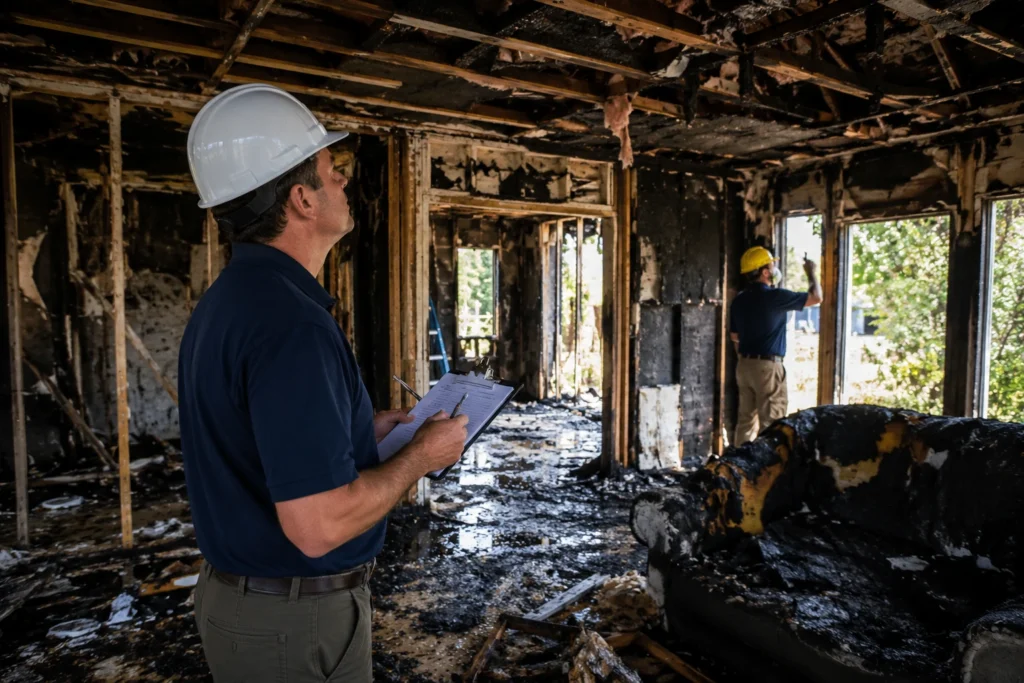
Smoke damage is one of the most underestimated aspects of fire losses. Flames create obvious destruction. Smoke creates hidden destruction. And hidden damage is harder to prove.
Smoke residue can affect:
- Electronics
- Appliances
- Fabrics
- Insulation
- HVAC systems
- Furniture
- Cabinets
- Structural materials
Some smoke particles are acidic. Over time, they may corrode metal surfaces and damage sensitive electronics. Odor contamination also becomes a major issue. A property may look visually clean while still carrying heavy smoke odor inside porous materials. That is why specialized cleaning and testing sometimes become necessary. The combustion process itself creates a complex mixture of residues depending on what materials burned during the fire. Different materials produce different contaminants. That matters during restoration.
Complex fire claims sometimes involve advanced environmental concerns tied to particulate contamination and structural residue behavior. In some restoration discussions, experts even reference concepts related to tribology when analyzing long-term surface degradation caused by smoke particles and corrosive residues after a fire. A skilled Homeowner Property Damage Adjuster may help property owners organize documentation, review estimates, and identify hidden damages that could otherwise be overlooked during the insurance claim process.
Fire Damage vs. Water Damage After Fire Suppression
Many property owners are shocked by how much water damage exists after firefighters extinguish the flames. Sometimes the water damage becomes nearly as destructive as the fire itself.
Water intrusion may affect:
- Drywall
- Flooring
- Insulation
- Electrical systems
- Framing
- Cabinets
If drying does not begin quickly, mold risk increases rapidly. This creates another layer of complexity for the claim. A strong fire insurance adjuster evaluation should account for both direct fire damage and secondary water-related damage caused during suppression efforts. The two should be documented separately. That distinction matters financially.
Important Documents Every Property Owner Should Keep
Organization matters enormously during a fire claim. The more organized you become, the easier it is to support the claim properly. Here are some of the most important records to maintain.
| Document | Why It Matters |
| Insurance Policy | Confirms coverage details |
| Photos & Videos | Documents damage extent |
| Receipts | Supports reimbursement |
| Contractor Estimates | Verifies repair costs |
| Communication Logs | Tracks conversations |
| Temporary Housing Bills | Supports living expense claims |
| Fire Reports | Confirms incident details |
Keep digital backups whenever possible. Paper documents can easily become damaged or lost after a fire event.
Signs You May Need Help With a Fire Insurance Claim
Not every claim requires outside assistance. Some smaller losses resolve fairly smoothly. But larger fire losses often become far more complicated than expected.
You may need additional help if:
- The damage is extensive
- The settlement feels too low
- Smoke damage was minimized
- The claim becomes delayed
- Communication breaks down
- Commercial losses are involved
- Inventory losses become disputed
- Business interruption coverage applies
This becomes especially important during large structural fires where hidden damage continues appearing during demolition. Those claims rarely stay simple for long.
How Public Adjusters Help With Fire Claims
Public adjusters focus on helping policyholders navigate complicated claims.
That can include:
- Reviewing the insurance policy
- Creating detailed estimates
- Organizing supporting evidence
- Managing communications
- Negotiating supplemental payments
- Documenting hidden damages
For many property owners, the biggest benefit is simply reducing overwhelm. Because fire claims can feel exhausting. You are already dealing with disruption, displacement, contractors, temporary housing, and emotional stress. Managing a large insurance claim on top of all that becomes difficult fast. Property owners in Abilene dealing with major residential or commercial fire losses often seek professional guidance because the financial stakes can become extremely high. And the larger the loss becomes, the more documentation matters.
Mistakes Property Owners Should Avoid After a Fire
Some decisions unintentionally weaken otherwise valid claims. Avoid these common mistakes.
Throwing Away Damaged Items Too Soon
Preserve evidence whenever possible. Damaged items help support the claim. Photograph everything thoroughly before disposal.
Starting Repairs Without Documentation
Emergency mitigation is necessary. Permanent repairs without documentation are risky. Always document conditions first.
Accepting the First Settlement Too Quickly
Initial offers are not always complete. Hidden damage often appears later during demolition and restoration. Review estimates carefully.
Failing to Track Additional Living Expenses
Temporary housing costs add up quickly.
Track:
- Hotel stays
- Meals
- Laundry expenses
- Transportation costs
- Storage fees
These expenses may qualify under additional living expense coverage.
Relying Only on Verbal Conversations
Document everything in writing whenever possible. Email trails matter. Detailed communication logs help avoid confusion later.
How Fire Insurance Adjusters Calculate Claim Value
Claim valuation is one of the most disputed parts of fire losses. Several factors influence settlement amounts.
Replacement Cost vs. Actual Cash Value
These are not the same thing.
| Valuation Method | Meaning |
| Replacement Cost | Cost to replace with new materials |
| Actual Cash Value | Replacement cost minus depreciation |
| Recoverable Depreciation | Amount reimbursed later after repairs |
Some policies initially pay actual cash value first and release recoverable depreciation later after repairs are completed. Understanding the policy structure matters enormously.
Labor and Material Costs
Repair pricing changes constantly. Labor shortages, material inflation, and regional demand all affect reconstruction costs. This is one reason estimates sometimes require revision during the claim process.
Building Code Upgrades
Modern codes may require upgrades during reconstruction.
Examples include:
- Electrical updates
- Roofing requirements
- Fire-resistant materials
- Ventilation changes
- Accessibility improvements
These additional costs can become significant.
Commercial Fire Claims Are Often Much More Complex
Commercial claims introduce another level of difficulty entirely.
Now the claim may involve:
- Revenue interruption
- Equipment replacement
- Tenant improvements
- Inventory loss
- Payroll disruption
- Temporary relocation
- Operational downtime
And business interruption claims are highly document-driven. Financial records become critical. A commercial fire insurance adjuster may spend substantial time reviewing accounting documents, revenue history, operational expenses, and restoration timelines. These claims can continue for months. Sometimes longer.
Fire Insurance Claims and Texas Regulations
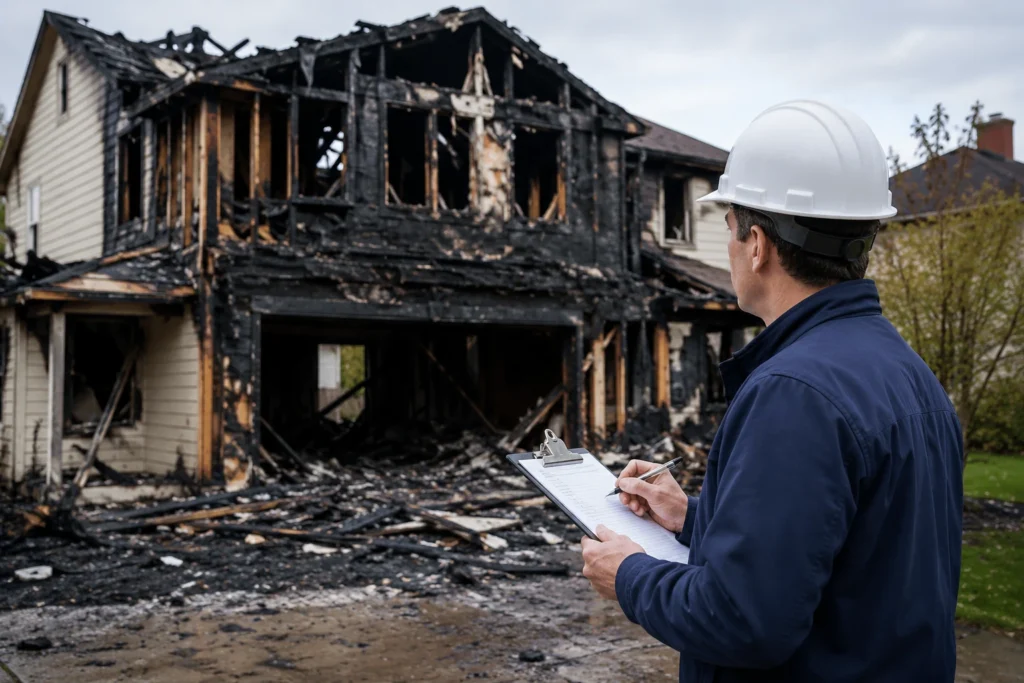
Texas has consumer protections designed to regulate adjusters and claim handling practices. Property owners should always verify licensing before hiring anyone involved in the claim. The Texas Department of Insurance provides information about public adjuster licensing and consumer protections for policyholders. This matters because large disaster events sometimes attract unqualified contractors and claim representatives. Always verify credentials carefully. That step alone can prevent major headaches later.
Choosing the Right Fire Insurance Adjuster
Not all adjusters have the same level of fire claim experience. And fire losses require specialized knowledge. Before hiring anyone, ask direct questions.
Questions Worth Asking
- Are you licensed in Texas?
- How much fire claim experience do you have?
- Do you handle commercial losses?
- Will you personally inspect the property?
- How are fees structured?
- Can you explain your estimating process?
The answers tell you a lot.
Red Flags to Avoid
Be cautious of:
- Unrealistic guarantees
- Pressure tactics
- Vague pricing
- Poor communication
- Incomplete documentation
- Immediate settlement promises
Serious fire claims require patience and careful evaluation. Anyone promising instant results should raise concern.
Why Timing Matters After a Fire Loss
Time changes evidence. That is the reality. Smoke spreads deeper into materials. Moisture damage worsens. Corrosion progresses. Structural conditions change. Delays also make documentation harder.
Strong claims are usually built on:
- Fast inspections
- Detailed photographs
- Organized records
- Consistent communication
- Thorough contractor evaluations
The sooner evidence gets preserved, the stronger the claim position often becomes. This is particularly important after large residential fires where multiple systems become compromised simultaneously.
Fire Insurance Adjuster Support for Homeowners in Abilene
Recovering from a fire is not just about rebuilding walls and replacing materials. It is about rebuilding stability. That process becomes much easier when property owners understand how claims work and what documentation matters most.
Homeowners in Abilene facing major fire losses often discover that the insurance process itself can feel nearly as stressful as the physical damage. Between inspections, inventories, estimates, temporary housing, and repair decisions, the amount of coordination required becomes enormous. That is why preparation matters. Careful documentation. Organized communication. Professional inspections. Detailed estimates. Those things strengthen claims. And stronger claims usually lead to better outcomes.
Final Thoughts
A fire loss changes life quickly. The emotional impact alone can feel overwhelming. Add financial uncertainty and insurance complexity on top of that, and the situation becomes even harder. But understanding the process helps. A knowledgeable fire insurance adjuster plays a major role in evaluating damage, estimating losses, and guiding claim decisions. Whether the adjuster works for the insurance company or represents the policyholder directly, their findings heavily influence the financial outcome of the claim. That is why property owners should stay proactive.
Document everything. Ask questions. Track expenses carefully. Review estimates thoroughly. And never assume the first evaluation tells the entire story. Because with fire claims, hidden damage is common, supplemental repairs happen frequently, and accurate documentation often becomes the difference between a smooth recovery and a long financial battle.
FAQs
A fire insurance adjuster evaluates property damage, reviews insurance coverage, and helps determine claim value after a fire loss.
Smaller claims may resolve within weeks, while large structural or commercial fire claims can take several months.
Yes. Many policies cover smoke contamination if it resulted directly from the fire event.
Yes. Photograph and document damaged items before disposal because they may support your insurance claim.
A public adjuster represents the policyholder, while an insurance adjuster works for the insurance company.
Hidden damage often appears during demolition or repairs, leading to additional costs beyond the original estimate.
Many policies include additional living expense coverage for temporary housing and related costs during repairs.
Yes. Water damage caused during fire suppression is commonly included in covered fire losses.
Photos, videos, contractor estimates, receipts, communication records, and inventory lists all help support the claim.
You may consider one if the claim is large, delayed, disputed, or involves significant smoke or structural damage.