
Texas homeowners know one thing for certain: hailstorms are not rare. They arrive fast, hit hard, and leave expensive problems behind. A single storm can destroy shingles, dent metal roofing systems, crack tiles, and create hidden leaks that take months to appear. That is exactly why understanding the roof hail damage insurance claim Texas process matters so much. And here is the reality many homeowners in Abilene discover too late. Roof damage is often underestimated during the first inspection.
Sometimes severely underestimated. Insurance carriers may miss critical components, contractors may overlook hidden structural problems, and homeowners may unintentionally weaken their own claim by failing to document damage correctly. I have seen situations where roofs looked “mostly fine” from the ground but required complete replacement after a closer inspection. This guide breaks down everything homeowners need to know about handling a hail damage on roof insurance claim properly. From identifying damage by roof type to navigating supplements and understanding why public adjusters often change claim outcomes, this is the complete resource property owners need before the next storm hits.
Why Texas Roof Hail Claims Are So Common
Texas experiences some of the most severe hail activity in the country. Large temperature swings, unstable atmospheric conditions, and powerful storm systems create the perfect environment for damaging hailstorms. In cities like Abilene, roofs often take repeated impacts over multiple storm seasons, even when damage is not immediately obvious. That creates a dangerous situation.
Minor-looking hail damage can gradually evolve into:
- Roof leaks
- Structural moisture problems
- Mold growth
- Decking deterioration
- Premature roof aging
- Insurance claim disputes later
And unfortunately, many homeowners only discover the extent of the damage after water starts entering the home. That delay becomes expensive.
Why Roof Damage Is Frequently Missed
One of the biggest misconceptions in the hail roof damage insurance process is the idea that obvious visible damage always exists. It does not. Some forms of hail damage are subtle. Others only appear during tear-off when contractors remove roofing materials. Certain roof systems also hide impacts differently depending on the material type. That is why experienced inspections matter enormously. Especially in Abilene where repeated storm exposure is common.
How to Identify Hail Damage by Roof Type
Not all roofs react the same way during hailstorms. The signs vary dramatically depending on the roofing system.
Asphalt Shingle Roof Hail Damage
Asphalt shingles show some of the most recognizable hail impacts. But they are also frequently misdiagnosed.
Common indicators include:
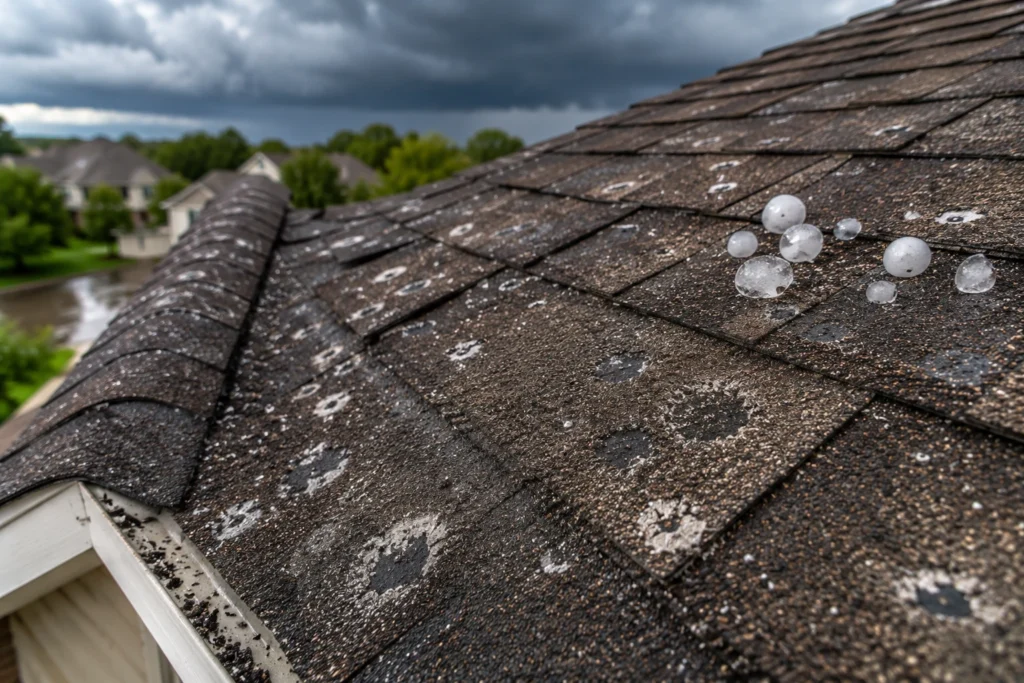
- Granule loss
- Circular bruising
- Soft impact spots
- Exposed fiberglass matting
- Creased shingles
- Fractured edges
Granules protect shingles from UV exposure. Once hail strips those granules away, shingles deteriorate faster under Texas heat. That aging process accelerates quickly. A roof may survive the storm initially but fail years earlier than expected afterward.
Common Asphalt Damage Areas
| Roof Area | Common Hail Damage |
| Ridge caps | Cracking and impact fractures |
| Valleys | Granule displacement |
| South-facing slopes | Accelerated deterioration |
| Roof edges | Wind-assisted impact damage |
Metal Roof Hail Damage
Metal roofs create a completely different challenge. Some hail impacts are purely cosmetic. Others compromise roof function. That distinction becomes a major insurance dispute.
Common metal roof damage includes:
- Dents and dimpling
- Protective coating fractures
- Fastener loosening
- Seam separation
- Flashing distortion
Insurance carriers sometimes argue that dents do not affect functionality. Homeowners and roofing experts may disagree completely. And in commercial properties, appearance alone can significantly affect value.
Tile Roof Hail Damage
Tile roofs are durable but not invincible.
Hail often creates:
- Hairline cracks
- Broken corners
- Fractured ridge caps
- Underlayment exposure
- Dislodged tiles
Hairline fractures are particularly dangerous because they worsen over time. At first, the roof may appear stable. Then months later? Water intrusion begins. That delayed progression causes many claim disputes during the hail damage on roof insurance claim process.
Flat Roof Systems
Flat roofs require extremely careful inspection after hailstorms.
Damage may include:
- Membrane punctures
- Crushed insulation
- Pooling water problems
- Seam separation
- HVAC equipment impacts
Commercial properties often experience hidden damage beneath membrane layers that cannot be identified through quick visual inspections alone.
Immediate Steps After a Hailstorm
The hours after a storm matter enormously. Fast action protects both your property and your insurance claim.
Prioritize Safety First
Never rush onto the roof immediately after a storm. Wet surfaces, loose shingles, electrical hazards, and structural instability create serious risks.
Instead:
- Inspect from the ground first
- Check ceilings for leaks
- Photograph exterior damage safely
- Watch for fallen power lines
- Protect interior belongings from water intrusion
Safety always comes first.
Document Storm Conditions Quickly
This is where strong claims begin. The earlier documentation starts, the stronger your position becomes later.
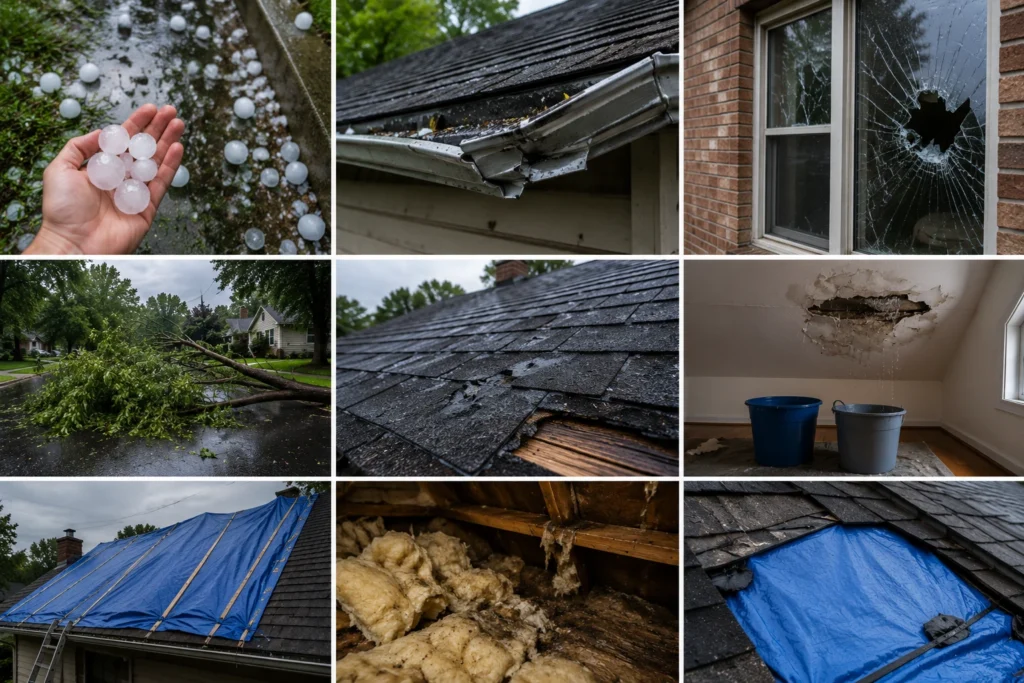
Take photos of:
- Hail accumulation
- Damaged gutters
- Broken windows
- Downed tree limbs
- Roof impacts visible from the ground
- Water intrusion areas
Also save:
- Weather reports
- Radar screenshots
- Storm alerts
- Local hail size reports
The stronger the evidence timeline, the harder it becomes for carriers to dispute storm-related damage later. Many property owners researching How to Document Hail Damage for an Insurance Claim quickly discover that strong photo evidence, inspection reports, weather data, and written communication records often determine how smoothly the claim process moves forward.
Prevent Additional Damage Immediately
Insurance policies require homeowners to mitigate further loss whenever possible. That means temporary protective measures matter.
Examples include:
- Emergency tarping
- Leak containment
- Removing soaked insulation
- Covering exposed openings
But document everything before repairs begin. That part is critical. Throwing away damaged materials too early can weaken a roof hail damage insurance claim Texas homeowners may later need to defend.
Why Professional Roof Inspections Matter
Not all inspections are equal. Some are extremely thorough. Others last fifteen minutes. That difference can completely change claim outcomes.
Experienced hail inspectors understand:
- Impact pattern recognition
- Hidden moisture indicators
- Code upgrade requirements
- Roofing system interactions
- Carrier estimating practices
In Abilene, repeated storm exposure creates cumulative roof deterioration that inexperienced inspectors may miss entirely. And once damage is missed early, disputes become harder later.
How to Document Damage for Your Insurance Claim
Documentation wins claims. Weak documentation creates delays, underpayments, and denials. It is really that simple.
Photos That Strengthen Claims
Good roof documentation includes both wide and detailed perspectives.
Capture:
- Entire roof elevations
- Individual hail impacts
- Damaged vents and flashing
- Interior ceiling stains
- Gutters with granule accumulation
- Broken fencing or siding
Close-ups matter. But context matters too. Insurance adjusters need to see how the damage relates to the overall roofing system.
Keep Every Piece of Paperwork
Organization becomes leverage during disputes.
Maintain copies of:
- Inspection reports
- Contractor estimates
- Temporary repair invoices
- Emails with adjusters
- Claim numbers
- Payment summaries
The more organized homeowners become, the smoother the hail roof damage insurance process typically goes.
Weather Data Matters More Than Homeowners Realize
Storm verification is powerful evidence.
Professional claim support often includes:
- NOAA weather records
- Radar verification
- Hail size mapping
- Wind speed documentation
This data helps connect roof damage directly to specific storm events. That linkage matters enormously during disputed claims. Severe storm systems sometimes produce unpredictable atmospheric behavior influenced by complex factors similar to tribology, especially when repeated surface impacts affect roofing materials over time.
Understanding Your Insurance Policy
Many homeowners do not fully understand their roof coverage until after a storm. That creates surprises. Sometimes expensive ones.
Replacement Cost vs. Actual Cash Value
These two terms dramatically affect settlement amounts.
| Coverage Type | Meaning |
| Replacement Cost | Pays full replacement cost minus deductible |
| Actual Cash Value | Pays depreciated roof value |
| Recoverable Depreciation | Additional reimbursement released later |
Older roofs frequently face depreciation disputes. And some policies contain endorsements limiting roof payouts based on age. Read the policy carefully before assuming full replacement exists.
Cosmetic Damage Exclusions
Some policies exclude cosmetic damage entirely. This becomes especially important with metal roofing systems.
Carriers may argue:
- Damage is only visual
- Roof functionality remains intact
- Replacement is unnecessary
These disputes often become highly technical.
What Happens During the Insurance Inspection
The carrier inspection heavily influences claim direction. Unfortunately, inspections vary dramatically in quality. Some adjusters perform detailed evaluations. Others move extremely quickly. That creates inconsistency.
Common Problems During Carrier Inspections
Issues often include:
- Incomplete measurements
- Missed roof slopes
- Ignored accessories
- Limited attic inspection
- Failure to identify code upgrades
- Underestimated material pricing
Even small omissions compound financially. A missing ventilation component here. An overlooked flashing section there. Suddenly the estimate falls thousands short.
What Insurance Carriers Commonly Miss in Their Scope
This is one of the biggest reasons supplemental claims exist. Initial scopes are often incomplete. One of the biggest issues during storm recovery involves Hail Damage Claim Supplements: What Carriers Miss in Their Scope, because hidden decking damage, flashing components, ventilation upgrades, and code-required repairs are frequently discovered after tear-off begins.
Flashing and Roof Accessories
Roof systems are not just shingles.
Important components include:
- Pipe boots
- Ridge vents
- Drip edge
- Valley metal
- Chimney flashing
- Step flashing
These items frequently sustain hail or installation-related damage during replacement. Yet many initial estimates overlook them.
Underlayment Damage
Underlayment acts as a secondary moisture barrier beneath roofing materials. Hail impacts may weaken it without immediate visible failure.
Problems often discovered during tear-off include:
- Moisture saturation
- Compression damage
- Tears
- Fastener stress
These discoveries frequently trigger supplemental payments.
Decking Problems
Rotten or compromised decking cannot safely support a replacement roof. If contractors discover deterioration during removal, repairs become necessary before installation continues. That additional work increases claim value. And it is commonly absent from initial carrier estimates.
Building Code Upgrades
Modern roofing codes evolve constantly. Many homes in Abilene require updates during replacement projects.
Examples include:
- Ice and water shield installation
- Enhanced ventilation
- Fastener spacing upgrades
- Drip edge compliance
- Secondary water barriers
Insurance carriers sometimes overlook these requirements initially. That creates major supplement disputes later.
The Supplement Process Explained
Supplements are incredibly common in hail claims. And honestly? They are often necessary.
What Is a Roofing Supplement?
A supplement is an additional request for payment after new information emerges.
Usually that means:
- Hidden damage discovered
- Additional labor required
- Code upgrades identified
- Material pricing increased
Supplements are not automatically fraudulent or inflated. Many represent legitimate corrections to incomplete scopes.
Why Supplements Become Necessary
Roof systems are layered. Certain problems only appear once removal begins.
Examples include:
- Rotten decking
- Wet insulation
- Ventilation deficiencies
- Hidden flashing damage
No contractor can fully predict every issue before tear-off. That is reality.
How the Supplement Process Works
The process typically involves:
- Contractor identifies additional damage
- Photos and documentation are gathered
- Supplemental estimate is prepared
- Carrier reviews submitted evidence
- Reinspection may occur
- Additional payment may be approved
The quality of documentation heavily influences approval speed.
Mistakes Homeowners Make During Supplements
Several avoidable mistakes weaken otherwise valid claims.
Throwing Away Damaged Materials
Preserve evidence whenever possible. Discarded shingles or damaged flashing may later become critical proof.
Starting Repairs Too Early
Emergency mitigation is fine. But full reconstruction before documentation creates problems. Always photograph and document thoroughly first.
Poor Communication
Keep written records of everything. Phone calls alone create confusion later. Email documentation protects homeowners during disputes.
Why Public Adjusters Change Claim Outcomes
This is where many major claim differences emerge. Public adjusters work exclusively for policyholders. Not insurance carriers. That distinction matters.
What Public Adjusters Actually Do
Public adjusters help:
- Interpret policy language
- Review carrier estimates
- Identify overlooked damage
- Develop supporting documentation
- Negotiate settlement amounts
- Manage supplements
Their goal is maximizing fair claim recovery based on policy coverage.
Why Public Adjusters Often Find Missed Damage
Experienced public adjusters understand:
- Roofing systems
- Texas storm patterns
- Carrier estimating software
- Construction pricing
- Building code requirements
That knowledge helps uncover gaps in carrier scopes. Especially during complex roof hail damage insurance claim Texas disputes.
Public Adjuster vs. Insurance Adjuster
| Role | Represents | Primary Goal |
| Insurance Adjuster | Insurance company | Control claim costs |
| Public Adjuster | Policyholder | Maximize fair recovery |
The discussion around Public Adjuster vs. Insurance Adjuster for Hail Claims in Abilene, TX usually comes down to representation, since insurance adjusters work for the carrier while public adjusters advocate for the policyholder during settlement negotiations. That difference alone changes claim strategy significantly.
Claims Where Public Adjusters Help Most
Public adjusters are particularly valuable when:
- Claims are denied
- Roof replacement is disputed
- Commercial properties are involved
- Multiple inspections disagree
- Supplements become extensive
The larger the claim becomes, the more valuable detailed representation often becomes.
Mistakes That Hurt Roof Hail Claims
Some homeowner decisions unintentionally damage strong claims. Avoid these mistakes.
Waiting Too Long to File
Delays weaken evidence. Weather exposure changes roof conditions over time. The longer homeowners wait, the harder damage becomes to prove.
Accepting the First Offer Immediately
Initial estimates are not always final. Especially when inspections were brief. Review scopes carefully before agreeing.
Relying Only on Verbal Conversations
Always request written confirmation.
Document:
- Claim decisions
- Scope explanations
- Payment breakdowns
- Inspection findings
Paper trails matter enormously.
Choosing Contractors Based Only on Price
Cheap bids often create future problems. Quality inspections and documentation matter more than low pricing during a hail damage on roof insurance claim. Homeowners searching for What to Do If Your Hail Claim Was Denied in Abilene, TX should understand that denied claims are not always final, especially when additional inspections, stronger documentation, or supplemental evidence reveal overlooked roof damage.
How Long Roof Hail Claims Usually Take
Timelines vary dramatically. Simple claims may resolve quickly. Complex claims? Much longer.
Factors Affecting Timeline
Common delay factors include:
- Supplement disputes
- Material shortages
- Reinspections
- Severe regional storm activity
- Contractor scheduling
- Policy interpretation disagreements
Large Texas storm events often overwhelm carrier resources temporarily. That slows inspections and approvals.
Protecting Your Roof Before the Next Storm
Preparation reduces both damage and claim stress.
Schedule Regular Roof Inspections
Annual inspections help identify vulnerabilities before storms arrive.
Especially important areas include:
- Flashing
- Ventilation
- Aging shingles
- Sealant failure
- Drainage systems
Consider Impact-Resistant Roofing Materials
Impact-rated materials may improve roof durability.
Options include:
- Class 4 shingles
- Enhanced underlayment systems
- Modified metal roofing
- Reinforced tile systems
Some insurers may even offer premium discounts.
Maintain Gutters and Drainage
Poor drainage accelerates roof deterioration. Keep gutters clear and functioning properly year-round.
Keep Roof Records Organized
Maintain:
- Installation invoices
- Inspection reports
- Repair records
- Warranty documents
- Roof photos
Strong records simplify future hail roof damage insurance claims significantly.
Final Thoughts
Hailstorms create far more than cosmetic roof problems. They create financial risk, insurance disputes, hidden structural damage, and long-term property issues that can follow homeowners for years if handled incorrectly. That is why understanding the entire roof hail damage insurance claim Texas process matters so much.
The homeowners who protect themselves best are usually the ones who act quickly, document thoroughly, understand their policy, and seek experienced guidance before accepting incomplete settlements. And in storm-prone areas like Abilene, preparation is not optional anymore. It is part of protecting the value of your home itself. A strong hail damage on roof insurance claim starts with knowledge. It continues with documentation. And it often depends on having the right professionals involved before critical mistakes happen. That combination can completely change the outcome of a claim.
FAQs
Look for bruised shingles, granule loss, cracked tiles, dented metal panels, and water stains inside the home after a storm.
Most policies require prompt reporting, but deadlines vary by insurer and policy language, so acting quickly is always best.
It depends on the severity of the damage, policy coverage, roof age, and whether repairs can restore the roof properly.
Document visible damage, prevent additional water intrusion, and schedule a professional roof inspection as soon as possible.
Yes. Hidden damage to shingles, flashing, or underlayment may not show immediate signs until moisture gradually enters the structure.
Initial inspections may miss code upgrades, hidden damage, roof accessories, or updated labor and material costs.
A supplement is an additional request for payment when contractors discover damage or costs not included in the original estimate.
Public adjusters can help when claims are denied, underpaid, or involve complicated roof damage disputes and supplements.
Individual claims may not directly raise premiums, but severe storm activity across Texas can affect regional insurance rates over time.
Sometimes, but some policies exclude cosmetic damage entirely, especially on metal roofing systems.